
Krakow history: a brief Old Town heritage guide
Explore Krakow history through the Old Town street plan, market, churches and civic landmarks. Understand heritage layers and the wider UNESCO area.
Heritage seen on a walk
Use the historic milestones to understand the city layout. The wider heritage area and the medieval street core are different planning boundaries.
Choices with every field
Place or area: Northern gate area
- What to notice
- The relationship between a gate, walls and the Barbican
- What the view alone cannot establish
- The full former extent of the defences
Place or area: Market streets
- What to notice
- How routes meet the square
- What the view alone cannot establish
- The age of every present façade
Place or area: Cloth Hall
- What to notice
- Trading use and later gallery use in one building
- What the view alone cannot establish
- That today's stalls reproduce medieval trade
Place or area: Town Hall Tower
- What to notice
- A surviving civic landmark
- What the view alone cannot establish
- That the whole former town hall remains
Place or area: A church interior
- What to notice
- Art from different periods within an active church
- What the view alone cannot establish
- Unrestricted visitor access
Place or area: Wawel
- What to notice
- Castle and cathedral as distinct choices
- What the view alone cannot establish
- A single ticket covering every space
City of Krakow's history account; UNESCO's property record; municipal tourism service ·
Krakow history is visible in the plan of Old Town, its market buildings, churches and surviving gate area. The town charter of 1257 helped shape the central square and regular street grid. The city was not created from nothing on that date. Wawel and other earlier settlement belong to a longer story. Today's buildings also reflect later rebuilding and changing uses.
This is a short guide to heritage you can recognise on a city walk. It is not a full political history or a claim that every façade survives unchanged from the Middle Ages. Use the places to start reading the city. Turn to a museum or the named source for more detail.
Read Old Town in layers. Start with the market and streets, then look at civic buildings and churches. Notice later changes to buildings and public space. UNESCO's Historic Centre includes Wawel and Kazimierz as well as the medieval town. Keep that wider heritage area distinct from the smaller Old Town walk around the square.
Krakow history: scope and source limits
This guide links the old centre with evidence about its places. The City of Krakow's history account provides the broad urban background. UNESCO's property record explains the heritage area and its value. Neither source should be read as a promise about current visitor entry.
A building can have an early foundation, a later structure and a still later interior. These are not competing dates if they describe different events. Before asking how old a landmark is, ask which part you mean. The date of a church's foundation does not always date its paintings, roof or entrance plan.
The same care applies to a street. A route may follow an old urban pattern while the buildings along it have changed. Look at the plan and the single structures on its own. That keeps the date tied to the object. A place in Old Town need not be medieval.
This page leaves detailed conflict history and memorial display narratives outside its scope. It also avoids unsourced legends as explanations for physical features. If a story is part of local tradition, that status needs to remain clear. A memorable tale and an established past event are different kinds of evidence.
Old Town urban development
The 1257 charter is a key point in the city's urban development. The municipal account connects it with a central market and a regular grid of streets under Magdeburg law. It also describes earlier development. The charter should not be mistaken for the beginning of all settlement in Krakow.
On a walk, use the square and streets to see that planning at a human scale. Stand at a street opening and look towards the market. Then compare the route you came along with another street leading away. You are looking at an urban pattern, rather than trying to date every visible building by sight.
This can be a useful first exercise before visiting an interior. It makes the market's role easier to grasp and gives you a useful sense of direction. You do not need a paid ticket to notice how streets relate to a central public space. For a wider visit plan, the Old Town guide connects that observation with today's choices.
Wawel is another part of the heritage area, with its own role in the city's development. UNESCO describes the hill together with the medieval town and Kazimierz. A walk around the square alone therefore shows only part of the listed property. Decide whether you want the wider view before treating a short Old Town circuit as a complete heritage visit.
Kazimierz also has its own urban history. The municipal account identifies it among the towns founded under Casimir the Great. Its place in modern Krakow should not erase that distinct development. Kazimierz adds another part of the city story. Read it as its own area, with a different past from the market streets.
The market and trading landmarks
The Main Market Square helps explain the trading function of the planned town. The Cloth Hall gives that function a visible building. Its current appearance and uses need to be read in layers. The municipal tourism service provides landmark background. The institutions inside explain their present collections and entry.
Look at the Cloth Hall from the square, then distinguish its trading passage from the museum above. The upstairs MNK Sukiennice gallery holds nineteenth-century Polish art. That collection is a later cultural use of a trading landmark. Browsing stalls and viewing paintings tell you different things about the building.
The square also has an archaeological story below today's surface. The Rynek Underground exhibition interprets evidence of the medieval trading city. If that subject interests you, it can add context that an exterior walk cannot provide. It is a distinct museum visit, with its own ticket and visitor entrance.
Use the contrast between above and below as a reading aid. The public square shows the city in use now. An display interprets material from its earlier development. Neither view replaces the other.
Seeing one does not mean you have understood every phase of the place. The two can make a well-focused day.
Do not read present-day souvenir stalls as a direct copy of all medieval trading practice. Their location carries a history. Their goods and business plans belong to the present. Historical continuity can involve a place retaining a broad role while much of its detail changes. That is more useful than treating Old Town as a preserved stage set.
Churches and civic buildings
Churches and civic landmarks show different functions within the old centre. St Mary's stands beside the market. The Town Hall Tower marks a civic site. Wawel brings royal and church history together. Their proximity does not make their histories or current access plans identical.
The Museum of Krakow's Town Hall Tower page identifies the surviving tower as a museum branch. The tower is the surviving landmark. Do not expect an entire town hall with civic rooms open to visitors. The surviving part and the wider historical institution are distinct.
At St Mary's, look at the building as an active church as well as a landmark. Its visitor system separates sightseeing from prayer and gives tower entry its own rules. Those useful divisions help keep a heritage visit respectful. They also remind you that historical buildings continue to have purposes beyond tourism.
The Franciscan Basilica provides another example of layers within a church. VisitMałopolska's account describes the early church and later rebuilding. It also notes Wyspiański's wall art and stained glass. A medieval building history and later art can belong to the same visit without contradiction.
At Wawel, distinct the castle's collections from the cathedral's visitor areas. The castle and cathedral publish their own details. Heritage account may connect them. A ticket or opening rule for one does not control the other. Choose the part you want to study before booking.
Learning and the university
The university is another part of Krakow's long civic life. The Jagiellonian University archive records its foundation by Casimir the Great in 1364 and renewal under Władysław Jagiełło in 1400. The two dates describe different moments in the institution's history rather than an error to be resolved by choosing one.
For a visitor, that example is a useful way to read other dates too. A foundation, a renewal and the construction of a specific building can all be relevant. Keep the label attached to the date when you take notes. “Founded” is more precise than simply writing a year beside a place name.
If university heritage interests you, look for the institution's current visitor details before adding an interior. A university is not just a museum, and not every historic room has public access. An open courtyard or a building exterior cannot establish consent to enter adjoining teaching or office space.
The university story also helps widen the view beyond kings and monuments. Learning is a different strand of the city's history from trade or civic government. You can choose that strand for a focused visit instead of trying to absorb every topic in one day. A narrower interest often makes the details easier to remember.
Use a short set of observations rather than a long checklist of dates. The route below is an editorial sequence for looking at places. It is not a measured guided itinerary. Check current maps and entry details before using it as your walking plan.
Begin at the gate area if it suits your starting point, then move towards the square. Pause to look at the market layout before choosing an interior. Continue towards Wawel only if that fits your day. Connect a few features with their uses. You can leave other sites for another day.
Read official labels where they are available and note the subject of each claim. A label about a gate may describe the gate itself, a later alteration or the wider defences. Taking a photograph of the text can help you review it later if camera use is permitted. Do not assume a decorative plaque is a complete account of the building's past.
If a detail matters to you, follow it into a reliable source rather than guessing. An odd shape in a wall or an unfamiliar symbol can prompt a useful question. Appearance alone rarely proves a date or use. Museum account can help place the feature within a supported account.
What the heritage listing means
UNESCO inscribed the Historic Centre of Kraków on the World Heritage List in 1978. Its record describes a property including the medieval town, Wawel and Kazimierz. The listing recognises heritage value. It is not an attraction pass, a timetable or an instruction that every building must be open to visitors.
Use that scope when looking at a map. “Old Town” in a walking plan can refer to a smaller central area than the whole listed property. Both terms can be useful, provided you know which one the page means. This distinction matters when you choose how much time to give Wawel or Kazimierz.
The record describes a city that remains in use. Buildings can retain heritage value as their uses change. Conservation also continues. Shops, worship and daily journeys sit alongside the museum view of the past.
For a deeper indoor visit, compare the subjects in the Krakow museums guide. If you want to travel beyond the city, the day trips page handles that decision on its own. A heritage interest can shape either choice. It should not erase the transport and entry planning each requires.
Sources and checks
- City of Krakow history: charter, street plan and wider urban development.
- UNESCO Historic Centre of Kraków: listed area, value and inscription.
- Jagiellonian University archive: foundation and renewal.
- MNK Sukiennice and Rynek Underground exhibition: different interpretations around the market.
- Town Hall Tower and Franciscan Basilica regional record: surviving civic and church landmarks.
Sources consulted in October 2026. Historical dates describe the stated event, not the age of every surviving part. Current visitor rules remain distinct from heritage background.
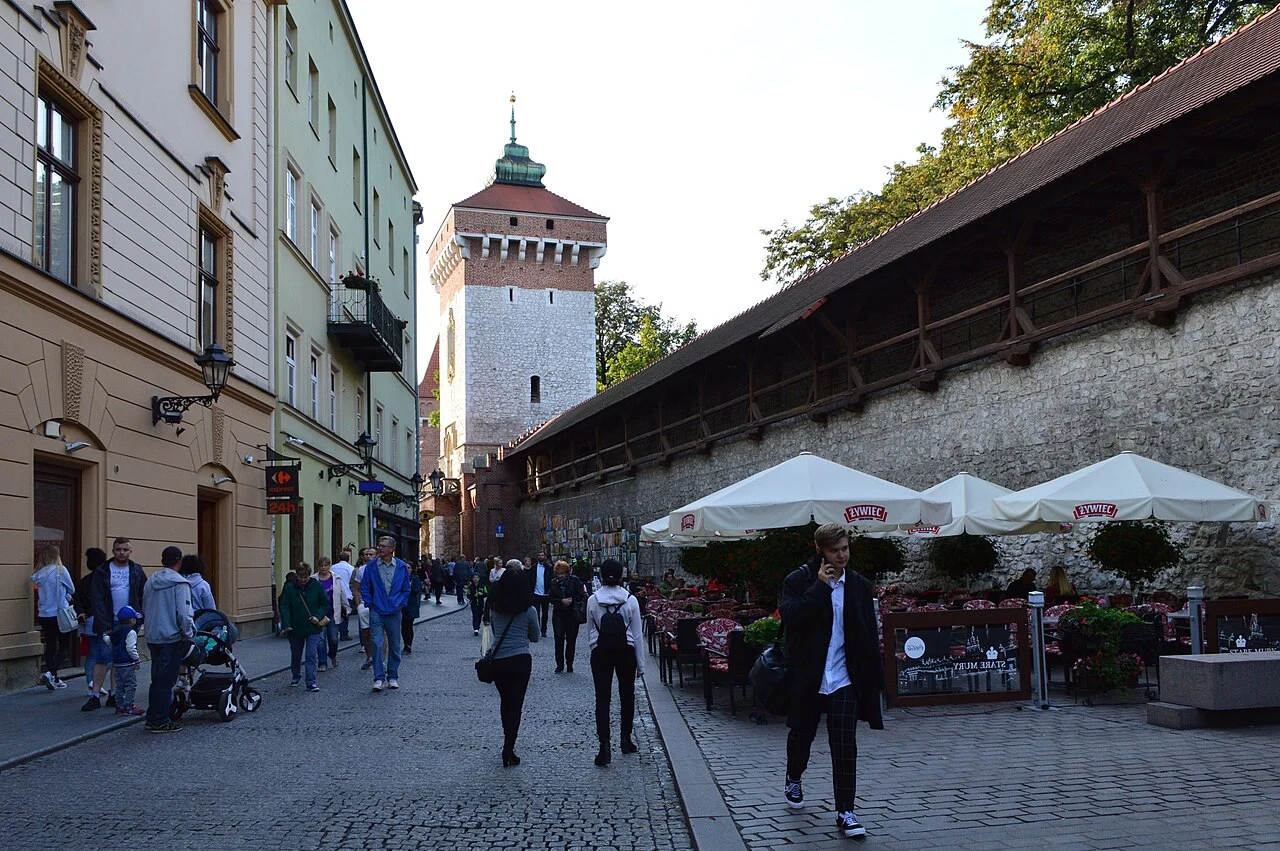
Photograph: Florian Gate 01.jpg by Scotch Mist, CC BY-SA 4.0. Resized and converted to WebP; no crop.

FAQ
Did Krakow begin in 1257?
No. That date relates to the town charter and planned urban layout. The municipal history describes earlier development.
Is the UNESCO property just the market square?
No. Its scope includes the medieval town, Wawel and Kazimierz. A square-side walk covers only part of it.
Is every building in Old Town medieval?
Do not assume that. Foundations, later rebuilding and interior art can belong to different periods.
Verdict on Krakow history
Krakow history is easier to follow through the street plan and the uses of its landmarks. Then distinct early foundations from later rebuilding, and heritage recognition from current visitor access. Read a few places well. Keep each date tied to its event.
That makes the city's past easier to follow.