
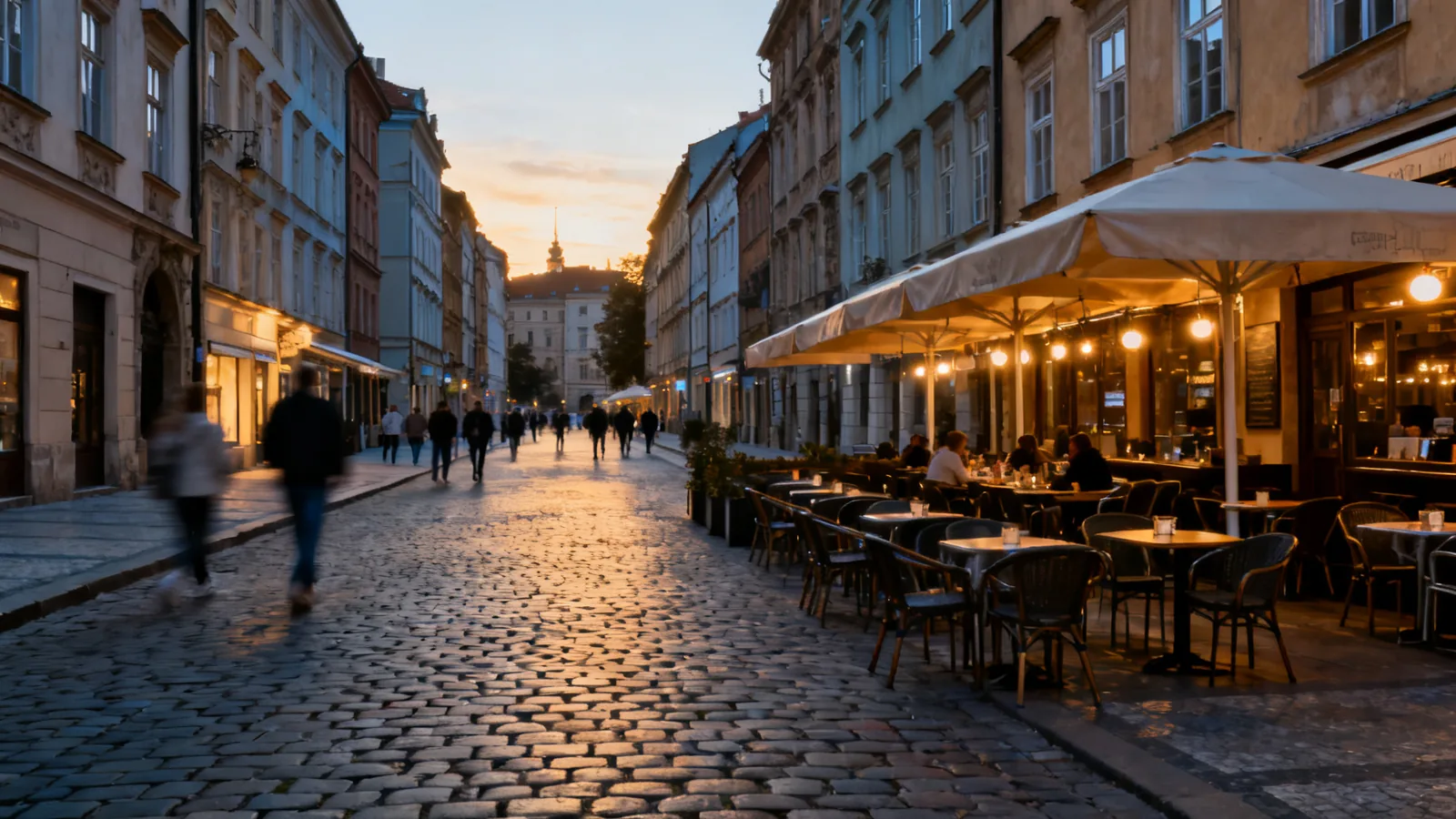
Is Krakow safe? Practical visitor precautions
Is Krakow safe for visitors? Read current UK and US advice, prepare arrival and evening routes, protect belongings and keep emergency help details.
Evening planning
Use practical precautions for the situation you encounter. National travel advice does not provide a measured crime score for each Krakow street.
Choices with every field
Part of the day: Arrival
- Preparation that helps
- Saved check-in address and access instructions
Part of the day: A busy journey
- Preparation that helps
- Ticket and valuables organised before boarding
Part of the day: A timed interior
- Preparation that helps
- Bag plan and any required identity document
Part of the day: An evening out
- Preparation that helps
- Return route and property contact
Part of the day: A problem
- Preparation that helps
- Emergency number, insurer and consular details
Is Krakow safe for a visitor? The official country advice provides a reassuring starting point, with normal precautions still needed. At the October 2026 check, the US State Department listed Poland at Level 1, “Exercise normal precautions”. The UK's FCDO says serious crime against foreigners is rare. Those are country-level statements, not a safety score for every Krakow street.
Plan arrival and the ride to your room. Keep belongings secure during the day. Decide how you will return after an evening out. Use the current advice for your nationality and follow local instructions. This guide does not promise that a place or activity is risk-free.
Use ordinary city precautions and a clear arrival and return plan. Keep valuables out of sight, choose transport whose identity and terms you can check, and keep your lodging address available. Read the latest country advice before travel. For an immediate emergency in Poland, call 112 and follow the operator's instructions.
Is Krakow safe? What official advice says
The US Poland advisory gives the country's current advisory level. The FCDO safety page covers crime and other risks relevant to British visitors. Both were checked in October 2026. Read their complete current versions before your trip, since conditions and advice can change.
Keep the scale of that evidence clear. A national advisory is useful context. It does not assess your hotel entrance, a certain late-night route or the taxi you are about to board. Those choices need their own checks. Nor does this page create a city crime rate from the country's advisory level.
If your plans extend beyond Krakow, read the sections relevant to the wider journey. Border travel and driving may raise questions that a city walking day does not. Give the itinerary you intend to follow to your insurer if required, and read the cover for the activities you choose.
Arrival and transport precautions
Have the check-in address and contact details ready before leaving the airport or station. Save them where you can use them without a live data connection. If your room uses a key code or a separate reception address, keep that instruction with the booking. A property name alone can leave you searching while carrying bags.
Choose your arrival mode in the airport to city center guide. Check the actual final stop or drop-off, then decide how you will reach the door. If you expect to arrive after reception hours, agree on access with the property in advance.
FCDO advises against unofficial taxis and gives identifying details for official services. Use the current advice when choosing a vehicle. For a booked ride, check that the vehicle and driver match the booking before entering. Keep the provider's contact and trip record available.
For public transport, know the boarding stop and direction before the vehicle arrives. Put the ticket and essential items where you can reach them without opening all your luggage. If you are travelling with others, agree on the destination and what to do if the group becomes separated.
Belongings and busy places
FCDO highlights petty theft in busy tourist places, stations and trains. Keep cash and valuables out of sight, and take care when withdrawing money. This is a practical reason to organise what you carry, rather than a claim that every crowd is dangerous.
Before a museum or tower visit, read the bag rule. You may want to leave a larger bag at your lodging or use a confirmed storage service. Do not assume a venue can accept a suitcase simply because it lists a cloakroom. Knowing the storage plan reduces the need to improvise at a timed entrance.
Use a small set of items for the day's walk and keep the rest where you have chosen to store it. If a ticket requires an original identity document, take the required one and keep it secure. A document photograph can help with your own records. It does not replace the original when the operator asks for it.
For a group, assign the booking records clearly. One person's phone may hold several tickets. Another has the contact details or route. Make sure the people who need them can access them if the main device fails. This is useful trip preparation without buying extra services.
Decide on the return journey before you begin the evening. Check the service at the time you expect to use it, or confirm a pickup method. The route that worked earlier in the day may have a different timetable later. Save the hotel entrance rather than only the street name.
Choose an approach you are comfortable using after dark. If you are unsure about a route, ask the lodging for a practical alternative. FCDO advises avoiding isolated areas alone at night. Keep that advice in mind without assuming that an entire district has one fixed safety status.
When ordering food or drinks, look at the price and bill. Keep your drink with you and take care with offers from strangers, as described by FCDO. If something feels wrong, leave the situation and seek help. You do not need to complete a planned evening because a booking or recommendation brought you there.
Emergencies and help
Use Poland's emergency number 112 for an immediate emergency. The government's service explains how calls are handled and provides reporting guidance. Tell the operator where you are and what has happened, then follow the instructions. Use a street address or recognisable location if you can.
For a travel incident, contact the relevant provider and your insurer when needed. Keep receipts and records that they request. For a lost document or consular matter, use your country's official assistance route. The FCDO help page is for British travellers. The US advisory links to US consular help.
Do not treat a hotel reception or this guide as a substitute for emergency services. Staff may help you identify the location or make contact. Urgent help should use the proper service. If you cannot make a voice call, read the government's information about Alarm112 and its requirements before relying on it.
Check before travel
Read the latest country advice and save the relevant official help details. Review the first journey and check-in process. Look at the property address in the Old Town hotel comparison and the broader where to stay guide before booking. Check how the base fits arrival and your later returns.
Once in the city, follow signs and any current instructions from the authorities. If a route or event changes, adjust the day instead of following an old plan at all costs. The Old Town guide can help keep sightseeing choices flexible around your practical needs.
Sources and checks
- US State Department Poland advisory: national advisory level and consular routes.
- FCDO Poland safety advice: country-level precautions.
- FCDO getting help: provider, insurer and official assistance.
- Polish government 112 service: emergency contact information.
Checked in October 2026. No city crime ranking, tested safe route or guarantee about an individual provider is asserted.
FAQ
Is the US advisory a rating of Krakow alone?
No. It applies to Poland. Use it as country context alongside the details of your own visit.
What should you save for an evening return?
Keep the property entrance, contact and transport plan available. Check the relevant late service or pickup terms.
What is the emergency number?
Poland's emergency number is 112. Give the location and follow the call operator's instructions.
Verdict on Krakow safety
Official advice supports a visit with normal precautions. Your own arrival, transport and evening choices still matter. Keep the practical plan clear and use current authority guidance. The answer to “is Krakow safe” should help you prepare, without pretending that a national advisory guarantees every part of a trip.